
California State University Northridge Athletics
4/28/2022 12:49:00 PM | Women's Soccer
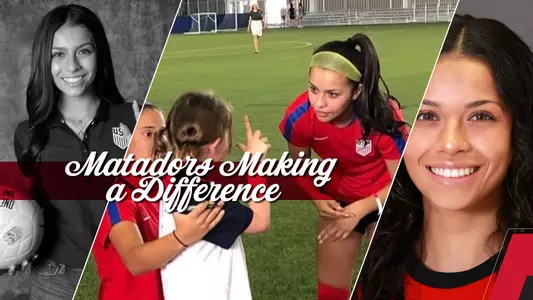
At first glance, Anessa Campos may seem to be an average student-athlete. But she is anything but that. If you happen to carry on a conversation with her, it may not be noticeable that she was, in fact, deaf.
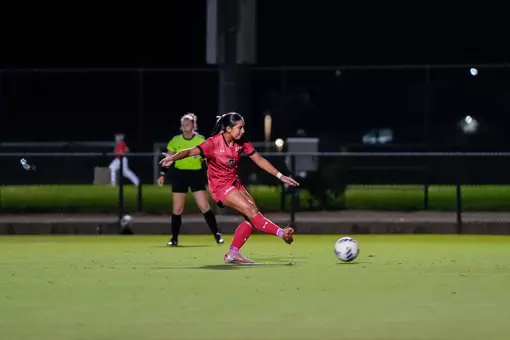
A transfer from Eastern Washington University, Campos joined the CSUN's Women's Soccer team this spring. Campos, a 5-6 forward from Riverside, has been nearly 100 percent deaf for her entire life.
"Some people don't believe me when I say I'm deaf because I speak so well," said Campos. "Sometimes, I have my hair down [covering the hearing aids] or people don't notice. The majority of people won't think I'm deaf unless you know me."
While she knows some sign language, Campos understands others by reading lips and has done so since the first grade. She identifies her mother as the person that helped her most with her speech.
"My mom would never let me continue a sentence until I said the words right," said Campos. "I'm grateful for that."
Bringing Division I experience, Campos will also give CSUN international experience when she makes her debut for the Matadors this fall.

In May, Campos will represent her country as a member of the U.S. Deaf Women's National Team (USDWNT) at the 2022 Deaflympics in Caxias do Sul, Brazil.
"Playing on the U.S. Deaf Women's National Team to me is both an honor and a privilege," said Campos. "Having the opportunity to represent our nation is an experience of a lifetime. I have been to several U.S. Deaf Women's National Team camps throughout the past few years that have prepared me for this opportunity and to compete at this level."
Campos has played sports from as far back as she can remember, and her first love was softball. Before taking up soccer, she played travel softball and competed a year of high school softball until deciding to invest her time in soccer fully.
"I started playing soccer in the eighth grade," she said. "What made me want to play was the kids in P.E. because they never wanted to play softball. They always wanted to play soccer instead, so I taught myself how to play.
"There's more energy to soccer. Just getting the ball into the back of the net is fun," she added.
With the help of her hearing aids, Campos did not find it challenging to play softball, but playing soccer came with its unique set of challenges. In a sport where verbal communication from teammates, coaches and even opponents is so prevalent, there was a bit of a learning curve.
"Soccer is a different pace," said Campos. "You can have someone coming up behind you, and you have to be more alert rather than softball where you are watching home plate or the pitcher. Soccer was very challenging with all of the talking and other players coming up next to you."
With time she became more accustomed to the nuisances and challenges soccer brought. During her time in high school, Campos played prep soccer at Grand Terrace High School, where she would win back-to-back league titles. In club, she gained more experiences playing with Legends FC.

As a 16-year-old, Campos was approached about the opportunity to compete with the USDWNT when she participated in the Olympic Development program. Excited about the opportunity to possibly represent her country, Campos would have to overcome significant challenges to compete with the USDWNT.
"These are girls just like me, and we're all playing deaf," said Campos. "It's even more challenging when I compete with my deaf teammates because we don't play with our hearing aids, so we are completely deaf. It's like silent soccer."
As mandated by the International Olympic Committee, deaf athletes cannot be guided by any sound whatsoever to ensure fair play during competition. Therefore, instead of whistles, flags and hand signals draw the players' attention while on the field.
"The first time playing without my hearing aids was tricky," said Campos. "Now, I had to be more alert. It was very challenging, but I adjusted to it by the second and third practices. You're just pointing everywhere in deaf soccer. You have to pay attention to hands."
On the USDWNT, Campos is playing alongside other collegiate athletes in her age group, but there are players on the team older than her, and in the case of a teammate of hers, twice her age. After a three-year process of training and competing at camps across the United States, Campos learned that she made the final roster earlier this year.
"Coming together with extremely talented players who are literally on the same page as me and can't hear has been interesting," she said. "Our means of communication are very different than what I've been used to."
After the Deaflympics conclude, Campos will continue training with the USDWNT in preparation to play in next year's World Deaf Football Championships in Mokpo-si, South Korea.

A well-rounded addition to the Matadors, Campos earned her first collegiate playing experience last fall at Eastern Washington, where she played in 12 games and scored a goal. She also excelled in the classroom, earning Big Sky All-Academic honors and showing her dedication to her athletic interests and her academics.
A criminology major, Campos hopes to follow in the footsteps of several of her family members and take up a career in law enforcement.
"Ever since I was nine, I've known I've wanted to go into law enforcement," she said. "I have a lot of family members who are higher up in law enforcement, and I want to follow their lead."
If school and soccer weren't enough, Campos also enjoys working with children. She has volunteered with the Ronald McDonald House on a seasonal basis over the past few years whenever she is back home.
She is also a certified referee and has worked youth soccer games since she was 13 years old. Most recently, she refereed games for the Grand Terrace Community Soccer Club.
"I became a U.S. certified ref about two years after I first started, and next thing I know, they are requesting me to ref games," said Campos. "I love it, I get to watch the sport I love, and I'm kind of in a way running the game."
With the spring season drawing to a close and she embarks on her journey with the USDWNT, Campos is eager for the coming year and her future with the Matadors.
"I'm beyond thankful for the trainings, the experience and the opportunities I've received to play in Washington and in SoCal," said Campos. "I'm excited to be back home in California and ready to compete in the Deaflympics."
Just an average student-athlete. Perhaps not.
#UniteTheValley
A transfer from Eastern Washington University, Campos joined the CSUN's Women's Soccer team this spring. Campos, a 5-6 forward from Riverside, has been nearly 100 percent deaf for her entire life.
"Some people don't believe me when I say I'm deaf because I speak so well," said Campos. "Sometimes, I have my hair down [covering the hearing aids] or people don't notice. The majority of people won't think I'm deaf unless you know me."
While she knows some sign language, Campos understands others by reading lips and has done so since the first grade. She identifies her mother as the person that helped her most with her speech.
"My mom would never let me continue a sentence until I said the words right," said Campos. "I'm grateful for that."
Bringing Division I experience, Campos will also give CSUN international experience when she makes her debut for the Matadors this fall.
In May, Campos will represent her country as a member of the U.S. Deaf Women's National Team (USDWNT) at the 2022 Deaflympics in Caxias do Sul, Brazil.
"Playing on the U.S. Deaf Women's National Team to me is both an honor and a privilege," said Campos. "Having the opportunity to represent our nation is an experience of a lifetime. I have been to several U.S. Deaf Women's National Team camps throughout the past few years that have prepared me for this opportunity and to compete at this level."
Campos has played sports from as far back as she can remember, and her first love was softball. Before taking up soccer, she played travel softball and competed a year of high school softball until deciding to invest her time in soccer fully.
"I started playing soccer in the eighth grade," she said. "What made me want to play was the kids in P.E. because they never wanted to play softball. They always wanted to play soccer instead, so I taught myself how to play.
"There's more energy to soccer. Just getting the ball into the back of the net is fun," she added.
With the help of her hearing aids, Campos did not find it challenging to play softball, but playing soccer came with its unique set of challenges. In a sport where verbal communication from teammates, coaches and even opponents is so prevalent, there was a bit of a learning curve.
"Soccer is a different pace," said Campos. "You can have someone coming up behind you, and you have to be more alert rather than softball where you are watching home plate or the pitcher. Soccer was very challenging with all of the talking and other players coming up next to you."
With time she became more accustomed to the nuisances and challenges soccer brought. During her time in high school, Campos played prep soccer at Grand Terrace High School, where she would win back-to-back league titles. In club, she gained more experiences playing with Legends FC.
As a 16-year-old, Campos was approached about the opportunity to compete with the USDWNT when she participated in the Olympic Development program. Excited about the opportunity to possibly represent her country, Campos would have to overcome significant challenges to compete with the USDWNT.
"These are girls just like me, and we're all playing deaf," said Campos. "It's even more challenging when I compete with my deaf teammates because we don't play with our hearing aids, so we are completely deaf. It's like silent soccer."
As mandated by the International Olympic Committee, deaf athletes cannot be guided by any sound whatsoever to ensure fair play during competition. Therefore, instead of whistles, flags and hand signals draw the players' attention while on the field.
"The first time playing without my hearing aids was tricky," said Campos. "Now, I had to be more alert. It was very challenging, but I adjusted to it by the second and third practices. You're just pointing everywhere in deaf soccer. You have to pay attention to hands."
On the USDWNT, Campos is playing alongside other collegiate athletes in her age group, but there are players on the team older than her, and in the case of a teammate of hers, twice her age. After a three-year process of training and competing at camps across the United States, Campos learned that she made the final roster earlier this year.
"Coming together with extremely talented players who are literally on the same page as me and can't hear has been interesting," she said. "Our means of communication are very different than what I've been used to."
After the Deaflympics conclude, Campos will continue training with the USDWNT in preparation to play in next year's World Deaf Football Championships in Mokpo-si, South Korea.
A well-rounded addition to the Matadors, Campos earned her first collegiate playing experience last fall at Eastern Washington, where she played in 12 games and scored a goal. She also excelled in the classroom, earning Big Sky All-Academic honors and showing her dedication to her athletic interests and her academics.
A criminology major, Campos hopes to follow in the footsteps of several of her family members and take up a career in law enforcement.
"Ever since I was nine, I've known I've wanted to go into law enforcement," she said. "I have a lot of family members who are higher up in law enforcement, and I want to follow their lead."
If school and soccer weren't enough, Campos also enjoys working with children. She has volunteered with the Ronald McDonald House on a seasonal basis over the past few years whenever she is back home.
She is also a certified referee and has worked youth soccer games since she was 13 years old. Most recently, she refereed games for the Grand Terrace Community Soccer Club.
"I became a U.S. certified ref about two years after I first started, and next thing I know, they are requesting me to ref games," said Campos. "I love it, I get to watch the sport I love, and I'm kind of in a way running the game."
With the spring season drawing to a close and she embarks on her journey with the USDWNT, Campos is eager for the coming year and her future with the Matadors.
"I'm beyond thankful for the trainings, the experience and the opportunities I've received to play in Washington and in SoCal," said Campos. "I'm excited to be back home in California and ready to compete in the Deaflympics."
Just an average student-athlete. Perhaps not.
#UniteTheValley
Wednesday, September 16
Thursday, September 03
Wednesday, August 26
Friday, February 13